

Bug Note Episode 12: Fear
Between the creature-feature flicks of Hollywood, the anecdotal accounts of stings and bites, and other societal factors, we’re often conditioned to be afraid of bugs. In reality, only a tiny fraction of the bug world presents danger to humans. In this episode of Bug Note, host Daniel Potter chats with NHMU Invertebrate Collections Manager, Christy Bills, about the fear of bugs. Listen to the podcast here or scroll down to watch the video version.
Bug Note is now available wherever you get your podcasts.
| Listen on Spotify | Listen on Apple | Listen on Amazon | Listen on iHeartRadio |
Biophobia describes the intense fear or negative reaction towards nature, which can manifest in a variety of ways. Some people experience this fear generally, while others feel an aversion to specific animals, like spiders or snakes. Sometimes this reluctance towards nature is the result of a true, diagnosed phobia. Other times, it’s simply a misinformed consequence of what we’ve been taught to believe. Tragically, this robs us of the opportunity to fully engage with the beautiful, rich diversity that nature has to offer.
And in reality, we have very little to be afraid of. Some insects, like mosquitoes, can transmit disease, and because those diseases can be dangerous, it’s definitely in our best interest to avoid being bitten by the little bloodsuckers. But most insects don’t warrant that kind of avoidance and shouldn’t be feared. The majority of invertebrates we observe or encounter are either unaware of humans or want nothing to do with us. Even some that we typically have an aversion to, like spiders, shouldn’t be feared: most of the spiders around your home don’t even have mouth parts big enough to bite humans.
But spiders aren’t the only innocent “villains” that people complain about. Bills often hears from people who fear wasps because they were stung once. She responds with an analogy that acknowledges the pain of the moment while reframing our broader perspective. “Has a human ever said anything mean to you? Humans are a lot more dangerous to other humans than wasps are.”
Reframing our association with nature is important — when we let one unpleasant experience color our perception, we lose the ability to fully enjoy and explore our world. Biophobia keeps a lot of folks indoors when mountains of research show that time in nature reduces anxiety, depression and even improves test scores for kids. So don’t judge a bug by its exoskeleton! Embrace the diversity of plant and animal life around you and choose curiosity over fear.
Bug Note on YouTube
Check out the extended conversation on YouTube. Be sure to like and subscribe to receive notice of upcoming episodes.
About Bug Note

Bug Note is hosted by Daniel Potter, a science writer who's also worked in the world of public radio for many years, and who loves fresh air and storytime. He's joined by Dr. Jason Cryan, NHMU’s Sarah B. George Executive Director and trained entomologist, and Christy Bills, NHMU's Invertebrate Collections Manager, as well as other bug-loving guests. Video production by Blank Space. The podcast is created in collaboration with the Natural History Museum of Utah, with the expertise and support of its scientific, philanthropic, marketing, and education teams. Special thanks to NHMU friend and insect enthusiast Ted Fridirici.
Authors
-

By Olivia Barney
Olivia serves as NHMU’s Marketing Copywriter/Coordinator, where she collaborates across departments to craft engaging stories that help bring groundbreaking research projects to life. She might be the Oxford comma’s number one fan.
-
By Christy Bills
Areas of Expertise • Insect collection curation • Science communication • Fireflies in the Western U.S. • Community Science Background Christy joined the Museum staff in 1998 and has been managing the invertebrate collections with the help of volunteers and interns ever since. Moving from 19th century technologies, she shepherded the collection from outdated housing to archival...
-
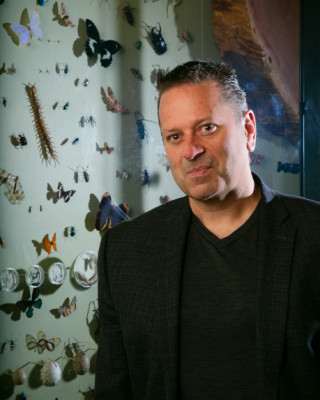
By Jason Cryan, Ph.D.
Areas of Expertise • Museum administration and leadership • Evolutionary biology • Entomology • Plant-feeding insects of the Order Hemiptera • Planthoppers, spittlebugs, treehoppers Background Jason Cryan, Ph.D., serves as the fourth executive director of the Natural History Museum of Utah. With its rich, 50-year history as the most important natural history museum in America’s...
-

By Dan Potter
Daniel Potter is a science writer and audio producer based in Nashville, Tennessee. He's reported for Nashville Public Radio and KQED in San Francisco, and has appeared on Science Friday and PBS NewsHour. He's also written for the Monterey Bay Aquarium. Some of his writing appears in the 2023 book Bay Curious: Exploring the Hidden True Stories of the San Francisco Bay Area.


