

Bug Note Episode 25: Venom
Across the wild world of bugs, many groups of insects have evolved to use the same survival tool: venom. For some bugs, venom is a weapon used to kill or immobilize prey. For others, it’s a defensive weapon. On this episode of Bug Note, host Daniel Potter chats about venomous bugs with the entomologist leading the Natural History Museum of Utah, Dr. Jason Cryan. Listen to the podcast here or scroll down to watch the video version.
Bug Note is now available wherever you get your podcasts.
| Listen on Spotify | Listen on Apple | Listen on Amazon | Listen on iHeartRadio |
Venom and poison are kinds of natural toxins, but they differ by method of delivery. Venoms are toxins that are injected, while poisons are absorbed, ingested, or inhaled. In general, if you bite it and get sick, it’s a poison. If it bites you and you get sick, it’s a venom.
Take spiders, for example. Many people fear venomous spiders, like black widows or brown recluses, because their venom can be damaging to human tissues. But Cryan reminds us that spiders aren’t wandering around looking to bite people. “They are not interested in biting you unless it's in a defensive position,” Cryan says. “For example, a black widow or a brown recluse won't bite unless they're trapped, pinned down, or trying to get out of the way. But they don't go around biting. It's energetically costly for them to expend their venom.”
In short, venomous bugs aren’t trying to hurt you. They’re trying to survive.
But their venom has the potential to impact human health in other ways. Medical researchers are investigating insect venom to better understand human diseases, and to potentially find new treatment options.
“There's a lot of interesting research going on now about the potential applicability of some venoms to treat diseases that affect humans,” Cryan says. “Just in the news recently was some research about how bee venom, wasp venom, can be an anti-tumor agent that attacks cancer cells and tumors."
The potential is all around us, but the research requires our curiosity and care for the natural world. As we learn more about the amazing critters around us, hopefully, we’ll be slower to label bugs as good or bad — instead marveling at the innovations of evolution.
Bug Note on YouTube
Check out the extended conversation on YouTube. Be sure to like and subscribe to receive notice of upcoming episodes.
About Bug Note

Bug Note is hosted by Daniel Potter, a science writer who's also worked in the world of public radio for many years, and who loves fresh air and storytime. He's joined by Dr. Jason Cryan, NHMU’s Sarah B. George Executive Director and trained entomologist, and Christy Bills, NHMU's Invertebrate Collections Manager, as well as other bug-loving guests. Video production by Blank Space. The podcast is created in collaboration with the Natural History Museum of Utah, with the expertise and support of its scientific, philanthropic, marketing, and education teams. Special thanks to NHMU friend and insect enthusiast Ted Fridirici.
Authors
-

By Olivia Barney
Olivia serves as NHMU’s Marketing Copywriter/Coordinator, where she collaborates across departments to craft engaging stories that help bring groundbreaking research projects to life. She might be the Oxford comma’s number one fan.
-
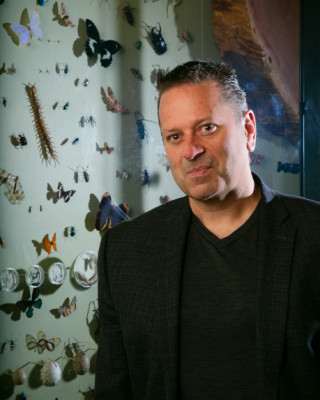
By Jason Cryan, Ph.D.
Areas of Expertise • Museum administration and leadership • Evolutionary biology • Entomology • Plant-feeding insects of the Order Hemiptera • Planthoppers, spittlebugs, treehoppers Background Jason Cryan, Ph.D., serves as the fourth executive director of the Natural History Museum of Utah. With its rich, 50-year history as the most important natural history museum in America’s...
-

By Dan Potter
Daniel Potter is a science writer and audio producer based in Nashville, Tennessee. He's reported for Nashville Public Radio and KQED in San Francisco, and has appeared on Science Friday and PBS NewsHour. He's also written for the Monterey Bay Aquarium. Some of his writing appears in the 2023 book Bay Curious: Exploring the Hidden True Stories of the San Francisco Bay Area.


