

Museum on the Move Pre-Visit Checklist
We're excited to come visit your school! Help us have a great day with your students by following these steps for success.
The week before your visit:
- Share the visit itinerary from your confirmation or reminder emails with the front office.
- Do you have forms you need us to sign? Please email these to us ahead of time.
- Complete the pre-visit lesson plan with your students.
- Do any of your students require additional help or translation? Please arrange for this ahead of time.
- Need to make changes to your itinerary? Click here to email us about the changes
The day of our visit:
- Let the front office know to expect our NHMU educator(s) 15-20 minutes before the scheduled start time, and where to send them.
- Classrooms work best for our visit. We'll use the whiteboard or smartboard (no computers necessary).
- Set up five stations for students to rotate around. These can be made by pushing desks together or using tables. Clear these stations of all other objects.
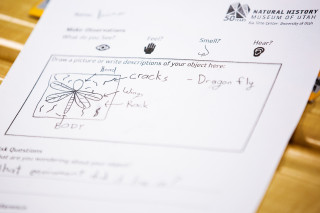
- Each student will need a pencil and somewhere to write (science notebook, scratch paper, etc) for recording their observations.
- If you feel like your students would benefit from a structured worksheet, you are welcome to print copies from the table below. Just one page per student!
We typically rotate through each 4th grade classroom, so it's a huge help to have your classroom ready to go before our start time!
Class Topic | Language of Worksheet |
Fossils, Great Salt Lake, Utah Through Rock Patterns, Structure and Function Utah Plants and Animals | |
| Archaeology - Utah's People and Cultures |
During class:
- Your participation is expected, valued, and necessary! Teachers who participate actively are eligible for relicensure credit for their time.
- Be engaged with students during the visit.
- Help students with microscopes (Utah's Plants and Animals or Great Salt Lake topics).
- Encourage observations.
- Keep students on task and manage student behavior. We don't know your students as well as you do!