

Bug Note Episode 7: Convergent Evolution
About Episode 7
Why do many distantly related species share similar traits and body structures? It’s all thanks to something called convergent evolution.
In this episode of Bug Note, host Daniel Potter chats with Jason Cryan, NHMU’s Sarah B. George Executive Director and a trained entomologist, to explore a few classic examples of convergent evolution in bugs. Listen to the podcast here or scroll down to watch the video version.
Bug Note is now available wherever you get your podcasts.
| Listen on Spotify | Listen on Apple | Listen on Amazon | Listen on iHeartRadio |
Evolution is a fascinating thing. It’s responsible for all the unique adaptations developed to help a species survive, and it ensures that species can continue to adapt to our ever-changing world. Through evolution, some insects developed the ability to fly, while others have mastered the art of camouflage. Occasionally, unrelated species have developed similar traits in independent responses to similar selective pressures.
When this happens, it’s called convergent evolution.
“There are many different insect lineages, completely non-related insects, that have hit on the same strategy for survival,” said Cryan, citing eyespots as one clear example.
Eyespots are exactly what they sound like: spots of color that give the appearance of eyes. They are false eyes located away from the insect’s head, acting as a defense mechanism. These false eyes could startle predators or ensure that if the bug does get bitten, the predator is targeting a non-vital area of the body.

It’s an effective defense, and one a plethora of bugs have embraced. “We have lineages of beetles,” Cryan explained, “and we have lineages of butterflies and moths — very different insects. We have lineages of hemipterans, again, very different insects. And they have all kind of independently hit on this strategy that is successful for evading predation.”
Independently hitting on the same strategy is exactly what convergent evolution is about. To learn more examples of convergent evolution within the bug world, listen to the extended version of Bug Note on YouTube.
Bug Note on YouTube
Check out the extended version of Episode 7 on YouTube. Be sure to like and subscribe to receive notice of upcoming episodes.
About Bug Note

Bug Note is hosted by Daniel Potter, a science writer who's also worked in the world of public radio for many years, and who loves fresh air and storytime. He's joined by Dr. Jason Cryan, NHMU’s Sarah B. George Executive Director and trained entomologist, and Christy Bills, NHMU's Invertebrate Collections Manager, as well as other bug-loving guests. Video production by Blank Space. The podcast is created in collaboration with the Natural History Museum of Utah, with the expertise and support of its scientific, philanthropic, marketing, and education teams. Special thanks to NHMU friend and insect enthusiast Ted Fridirici.
Episode Seven at a Glance
Authors
-

By Olivia Barney
Olivia serves as NHMU’s Marketing Copywriter/Coordinator, where she collaborates across departments to craft engaging stories that help bring groundbreaking research projects to life. She might be the Oxford comma’s number one fan.
-
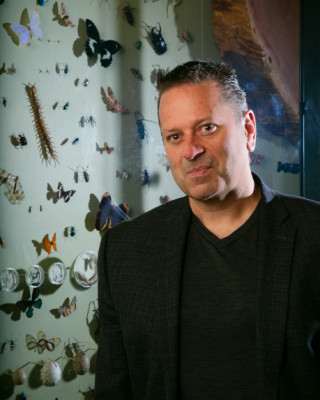
By Jason Cryan, Ph.D.
Areas of Expertise • Museum administration and leadership • Evolutionary biology • Entomology • Plant-feeding insects of the Order Hemiptera • Planthoppers, spittlebugs, treehoppers Background Jason Cryan, Ph.D., serves as the fourth executive director of the Natural History Museum of Utah. With its rich, 50-year history as the most important natural history museum in America’s...
-

By Dan Potter
Daniel Potter is a science writer and audio producer based in Nashville, Tennessee. He's reported for Nashville Public Radio and KQED in San Francisco, and has appeared on Science Friday and PBS NewsHour. He's also written for the Monterey Bay Aquarium. Some of his writing appears in the 2023 book Bay Curious: Exploring the Hidden True Stories of the San Francisco Bay Area.


