

Museum on the Move Topics
Want to know more about a specific Museum on the Move topic? Scroll down to see details on what 4th grade SEEd standards each topic covers.
All Museum on the Move classes help students practice the following Science and Engineering Practices:
- Asking questions and defining problems
- Constructing explanations and designing solutions
- Engaging in argument from evidence
- Obtaining, evaluating, and communicating information
Click here to return to the Museum on the Move overview page
Fossils: Evidence of Utah's Past
What can fossils tell us about Utah’s past? Explore ancient habitats and adaptations through fossils both big and small, and across Utah’s incredible range of fossil history.
SEEd Strand 4.1 Organisms functioning in their environment
4.1.1 - Structure and function of organisms
4.1.3 - Stability and change from fossil evidence
4.1.4 - Patterns in rock layers and fossils show change over time
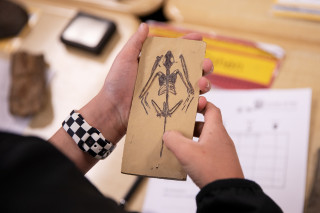
Each of the five stations represents a different time in Utah's history with fossils that are representative of life at that time. For example, a station about Utah in the Eocene Period includes fossils such as a turtle shell, bat skeleton, petrified wood, fish fossils, leaf fossils, and a crustacean shell. Each station has a map of Utah at that time. Students use their observations of the fossils and their map-reading skills to construct explanations related to changes in Utah over time.
Artifacts: Utah’s People and Cultures
What can we learn about the people who came before us from the things they left behind? Students become archaeologists by exploring artifacts from Ancestral Puebloan and Fremont people.
Grade 4 Social Studies:
Strand 4.1 - Students will understand the relationship between the physical geography in Utah and human life
Standard 4.2.1: Use evidence to make inferences about the geography of the land that would become Utah in the culture of one or more prehistoric or historic Native American cultures
Standard 4.2.3: Use primary sources to compare important aspects of the ways of life of indigenous groups existing within the land now called Utah
| Station | Example Artifacts | Guiding Question |
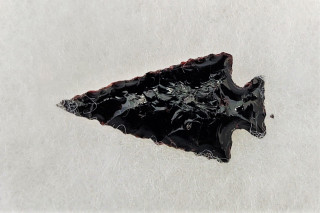
| What is an artifact? | Artifacts and raw materials (ex: a piece of obsidian and a projectile point made of obsidian) | What natural resources are used to make tools? |
| Perishables | Yucca cordage, split twig figurine, wooden spindle, fiber basket | What can we learn from these artifacts about the people that used them? |
| Food | Mano and metate, corn, beans, projectile points, squash, pinyon nuts | How did people obtain food in the past? |
| Movement | Objects with origins outside Utah (ex: turquoise beads, abalone, cotton) | In what ways did these materials travel? What can we learn from them? |
| Pottery Tradition | Pottery sherds from across Utah’s history | How did pottery and pottery designs change over time? |
Our Great Salt Lake
What can the Great Salt Lake tell us about Utah's unique geography? Students explore what makes the Great Salt Lake of regional, national, and global significance using scientific skills of observation and inference.
SEEd Strand 4.1: Organisms Functioning in their Environment
4.1.1 - Structure and function of organisms
4.1.4 - Relationship between fossils and past environments
Social Studies Strand 4.1 Utah's Unique Geography
4.1.3 - Describe how the physical geography of Utah has both negative and positive consequences on our health and safety
Social Studies Strand 4.5 A New Millenia
4.5.3 - Use data and trends to make recommendations for the best sustainable development of Utah’s resources.
| Station | Example Specimens | Guiding Question |
| Lake Bonneville | Mammoth tooth fossil, shell fossils, conifer plants | How did Lake Bonneville support these specimens? |
| Watersheds | Freshwater fish, plants, reptiles, insects | What depend on the water before it gets to the Great Salt Lake? |
| Antelope Island | Mammal skulls, insects, plants | How do organisms rely on each other on Antelope Island? |
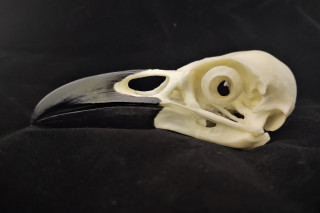
| Migration Station | Bird skulls and images | Do these birds all eat the same thing? How can you tell? |
| Brine Shrimp | Microscopes, slides with brine shrimp, 3D models of brine shrimp life cycle stages | What structures help brine shrimp survive in the Great Salt Lake? |

The view over Kolob Canyon in Zion National Park
Utah Through Rock Patterns
What can patterns in rock layers tell us about environmental change over time? What do these patterns tell us about Utah’s past environments? Students become geologists by exploring specimens from around Utah while learning to interpret clues about the past.
SEEd Strand 4.1
4.1.4 Patterns in rock layers and fossils show change over time
| Station | Specimens | Represents |
| Wasatch Mountains | Metamorphic rocks, crystals | Metamorphism and uplift |
| Moab | Layered sedimentary rocks, marine fossils, plant fossils | Ancient beach |
| Silver Island Mountains | Igneous rocks, crystals, precious metals | Volcanic environment |
| Antelope Island | Metamorphic rocks, sedimentary rocks, oolitic sand, crystals | Metamorphism, uplift, and Lake Bonneville |
| Topaz Mountain | Minerals with large crystals | Minerals formed underground from high temp fluids |

Structure and Function: Utah's Plants and Animals
How do plants and animals survive in different habitats? Explore the structures and construct an explanation on the functions of animal skulls, plant seeds, insect wings, and more!
Strand 4.1 Organisms functioning in their environment
4.1.1 - Internal and external structures support an organism's survival in its environment
| Station | Example Specimens | Guiding Question |
| Teeth | Mammal skull replicas (bear, deer, cougar, rabbit, etc.) | Why do these animals have differently shaped teeth? What is their function? |
| Wings | Microscopes, insects with diverse wing structures (moth, dragonfly, wasp, beetle, etc.) | Why do the structures of each insect look different? Do they have the same function? |
| Habitats | Turtle shell, scorpion exoskeleton, snake skeleton, cattail, fish skeleton | What structures allow each organism to function in its habitat? |
| Plant Parts | Sumac berries, teasel seed heads, arrowleaf flowers, maple leaves, milkweed pods | What is the function of each plant structure? |
| Bird Beaks | Bird skull replicas from native species (goose, ibis, heron, owl, hawk, robin, pelican, etc.) | Why do these birds have differently shaped beaks? What is their function? |